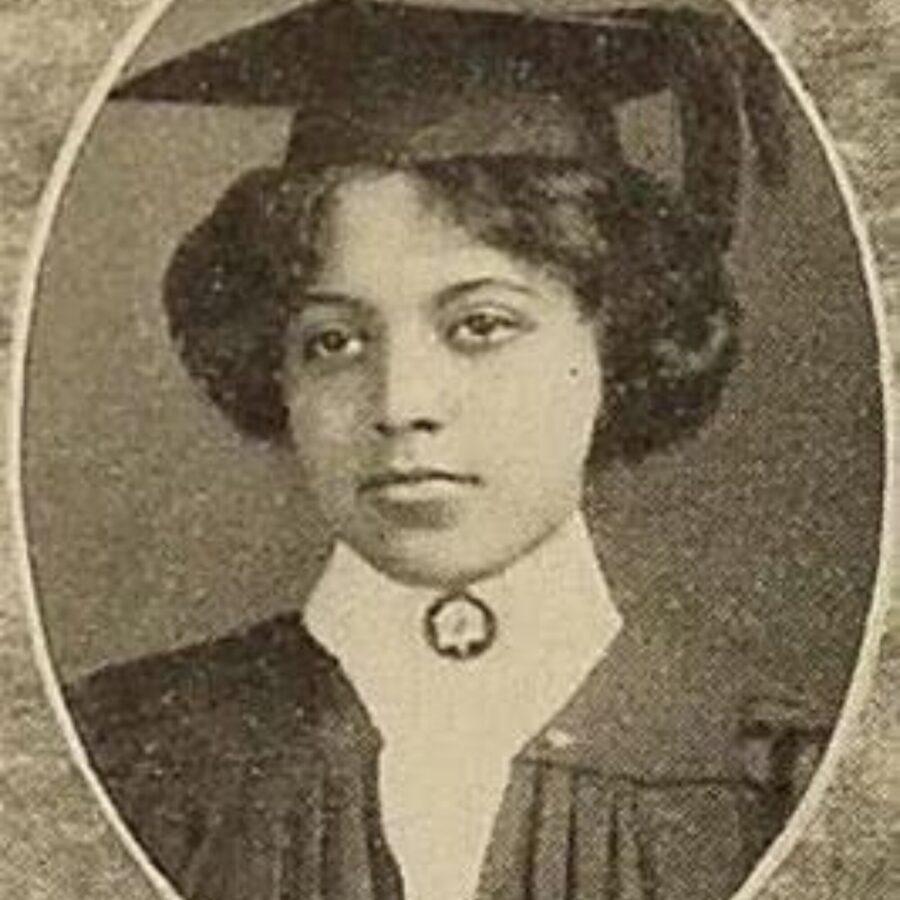


Who was Alice Ball?
Alice Ball (1892-1916) was a chemist whose groundbreaking work altered the treatment of Hansen’s Disease, more commonly recognised as leprosy.
What is Hansen’s Disease?
Hansen’s Disease is an infection which attacks the skin, the peripheral nerves, eyes and upper respiratory tract, causing nerve damage which may lead to permanent disabilities if left untreated. Historically, Leprosy is one of the oldest diseases known to mankind, and it was highly stigmatised within society due to the physical disfigurement which resulted in individuals also being shunned from their community and forced into isolation.
Mycobacterium Leprae (myco translates to fungi or mushroom, bacterium to rod-shaped and leprae to scaly) is the bacteria which causes the disease. Leprosy can cause physical deformities due to the lack of nerve ability to detect harm, which may cause burns and deep wounds. Additionally, the nerve damage could result in foot drop (the inability to pick up the front part of one’s foot because of paralysis or weakness causing it to drag), facial paralysis or eye blindness due to the fact that an individual may not have the ability to blink. Without this natural reflex, an individual’s eye may also become drier because of the nerve damage, which could paralyse their eyelids if severe.
Her Background and Education
Alice Ball was born in Seattle, Washington and was the third child of James Presley Ball Jr and Laura Louise Ball in 1892. Laura Louise Ball was a photographer who heavily influenced her daughter’s interest in chemical processes and the science behind the darkroom. Her father, James Ball Jr was a magazine editor and lawyer born in Ohio in 1851 to James Presley Ball Sr, a renowned photographer, abolitionist and businessman. James Ball Sr was an abolitionist as well as being one of the first African-American people to learn the daguerreotype photography process. During his life, he photographed famous sitters such as Fredrick Douglass, Charles Dickens and is also rumoured to have made portraits of Queen Victoria.
Alice Ball excelled in her studies at Seattle High School and was also one of the only African American students in the school. She achieved excellent grades in high school and went on to earn a Ph. C (now known as an associate’s degree) in pharmaceutical chemistry in 1912 and pharmacy in 1914 at the University of Washington. In the same year she graduated from the University of Washington, Ball continued her education at the University of Hawai’i (now the University of Hawaii), where she completed a master’s degree in chemistry in 1915, having received a full post-graduate scholarship to the institution. Ball was the first woman of colour to earn a master’s degree in chemistry in the United States. Alice Ball was also offered a teaching and research position at the University of Hawai’i’, where she became the first female instructor of chemistry. She achieved all of this before she turned twenty-four years old.
Ball’s Research
After graduation at the University of Washington in 1914, Ball co-authored the paper “Benzoylations in Ether Solution” along with her instructor William M. Dehn, which was published in the Journal of the American Chemical Society. This 10-page research document focused on the effects of adding a benzoyl group (C6H5CO) to organic compounds using anhydrous ether as a non-aqueous solvent. The benzoyl group is a functional group derived from Benzoic acid. The acid is widely used across pharmaceuticals, especially in acne treatment,t and is also used to protect alcohol and amine groups in complex chemical reactions.
While pursuing her studies at the University of Hawai’i, Alice Ball researched the chemical composition of the ‘awa (or kava) root for her master’s thesis (The Chemical Constituents of Piper Methysticum; or The Chemical Constituents of the Active Principle of the Ava Root). Specifically, she looked heavily into the molecular mechanics behind isolating active plant compounds in these roots, which had a strong influence on the method she used to tackle the cure to Hansen’s Disease.
Having published her master’s thesis on the kava root, her work caught the interest of Harry T. Hollmann, who was a doctor at the Leprosy Investigation Station of the U. S. Public Health Service in Hawaii. He allowed her to study chaulmoogra oil, which led her on to the groundbreaking treatment of leprosy- the disease which scientists have been trying to treat for centuries.
The Ball Method
The term ‘Ball Method’ recognises Alice Ball’s creation of converting chaulmoogra’s fatty acids into ethyl esters, making it highly soluble so it may be injected into a patient’s bloodstream more easily, causing less pain to the patient. Using her knowledge from her research on the ‘awa root, where she understood the concept behind isolating active ingredients of the root, she applied the same technique to the chaulmoogra oil. This method made an injectable soluble mixture which didn’t contain any side effects, such as the vomiting that was previously experienced by patients.
Chaulmoogra oil is an ancient botanical remedy that is mostly found in South-East Asia, which is currently commonly used in serums and body lotions as it has soothing and anti-inflammatory properties. The oil is thick and viscous, which makes it difficult for it to be absorbed into the bloodstream and hard for it to be taken into the body orally. Instead of the individual’s health improving, ulcers and skin abscesses start to develop, making the treatment extremely ineffective and painful.
The Barriers Alice Ball Faced
Alice Augusta Ball died on the 31st of December 1916 at the age of twenty-four. Her cause of death is not certain. Whilst it says on her death certificate that she passed away due to tuberculosis, there is a strong likelihood that she died of severe chlorine poisoning following a lab accident where she used a gas mask. Ball never was allowed to witness the impact her research and discovery had on the people who had suffered from leprosy all their lives. Since her research on Hansen’s disease was never published during her life, Arthur L.Dean, the second president of the University of Hawai’i, continued her research, eventually publishing her work in 1917 under his name- completely striking Alice Ball’s name off any contribution and commitment she had dedicated to her work. In fact, before Dr Hollmann (the assistant surgeon) in 1922 brought Alice Ball’s name to light so she could receive the recognition she deserved, the method was called the ‘Dean Method ’, not the Ball Method.
Her Legacy
Despite having had a relatively short life, Alice Ball impacted the world of medicine and pharmaceutical knowledge far more than most scientists do in their lifetimes. During her educational endeavours, Ball established a name for herself as the first African-American female to have graduated with a master’s degree in chemistry from the University of Hawai’i, and she became the first research chemist in the university’s chemistry department. But of course,e the most notable accomplishment she achieved was the fact that she was the first person to actively understand the importance of the ingredients in the chaulmoogra oil and harness them to cure those who suffered from Hansen’s disease.
Ball affected thousands of lives globally, from a lifetime of exile from society, allowing them to continue living at home and resuming their daily lives. Alice Augusta Ball Day, which is celebrated every leap year on February 29th, mirrors the memory of the lack of recognition she received after her death and the idea that her work was overlooked and uncredited by the general public and fellow scientists alike. However, since the 29th was originally established in the year 2000, the University of Hawai’i moved it to the 28th of February so that its legacy may be celebrated annually.
This article was written by Elika Dutta – connect with Elika on LinkedIn here!