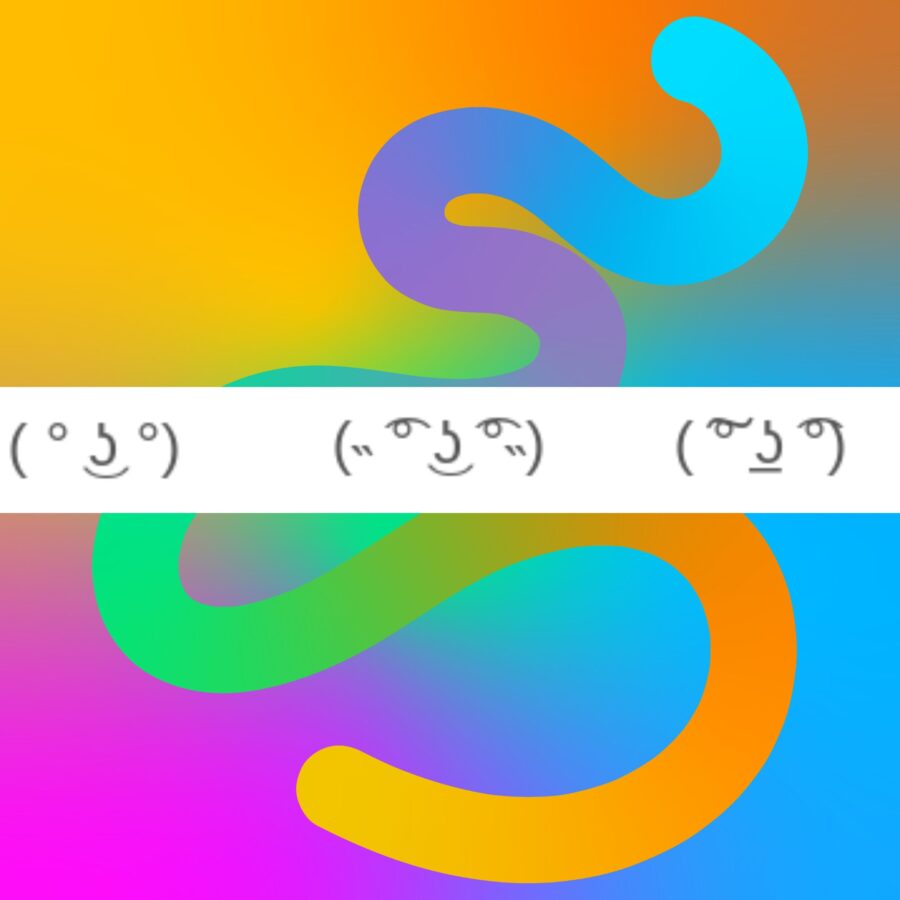

Have you ever wanted to express an emotion online but felt that a standard emoji just didn’t quite capture it? Enter kaomojis! They are the creative, text-based Japanese emoticons that use a mix of grammar symbols and special characters to bring faces to life. While ASCII art creates large pictures, kaomojis pack all that personality into a single line of text!
What is a Kaomoji?
The word comes from the Japanese kao (face) and moji (character). Unlike Western emoticons that you have to tilt your head to read, kaomojis are read horizontally. They use underscores for mouths, parentheses for the face outline, and symbols like asterisks for eyes. By blending linguistics and digital design, a kaomoji is made!
The Evolution of the Kaomoji
Kaomojis became popular in the late 1980s. Because the Japanese language uses lots of characters (including Katakana and Kanji), users had a massive “toolbox” of symbols compared to the limited Western alphabet.
But, as tech improved and Unicode (the way your computer ensures text is read the same across languages) became the global standard, these expressive faces spread worldwide. Today, they represent a unique intersection of STEM and art, showing how technical constraints can be a good thing, letting people get creative!
Why We Still Use Them
Even in a world of high-definition 3D emojis, kaomojis remain a favourite for creative people because:
- They’re versatile: They work in coding environments, prompts, and plain text files where images can’t go.
- They’re sometimes easier to understand: Can a regular emoji capture the specific energy of a “shrug”? Probably not as well as ¯\_(ツ)_/¯.
- They’re used across platforms: They don’t rely on a specific phone update to look the same on every screen.
Create Your Own
Ready to try? You don’t need fancy software – just your keyboard and a little imagination. Here’s some to get you started!
- Happy: ( ^ω^ )
- Sad: ( ; _ ; )
- Sparkle: (ノ◕ヮ◕)ノ*:・゚✧